
Journal · 08
What does a GHK-Cu serum percentage really mean?
How to distinguish supplier blends from active content, read a batch COA and ask about stability without judging a serum by its color.
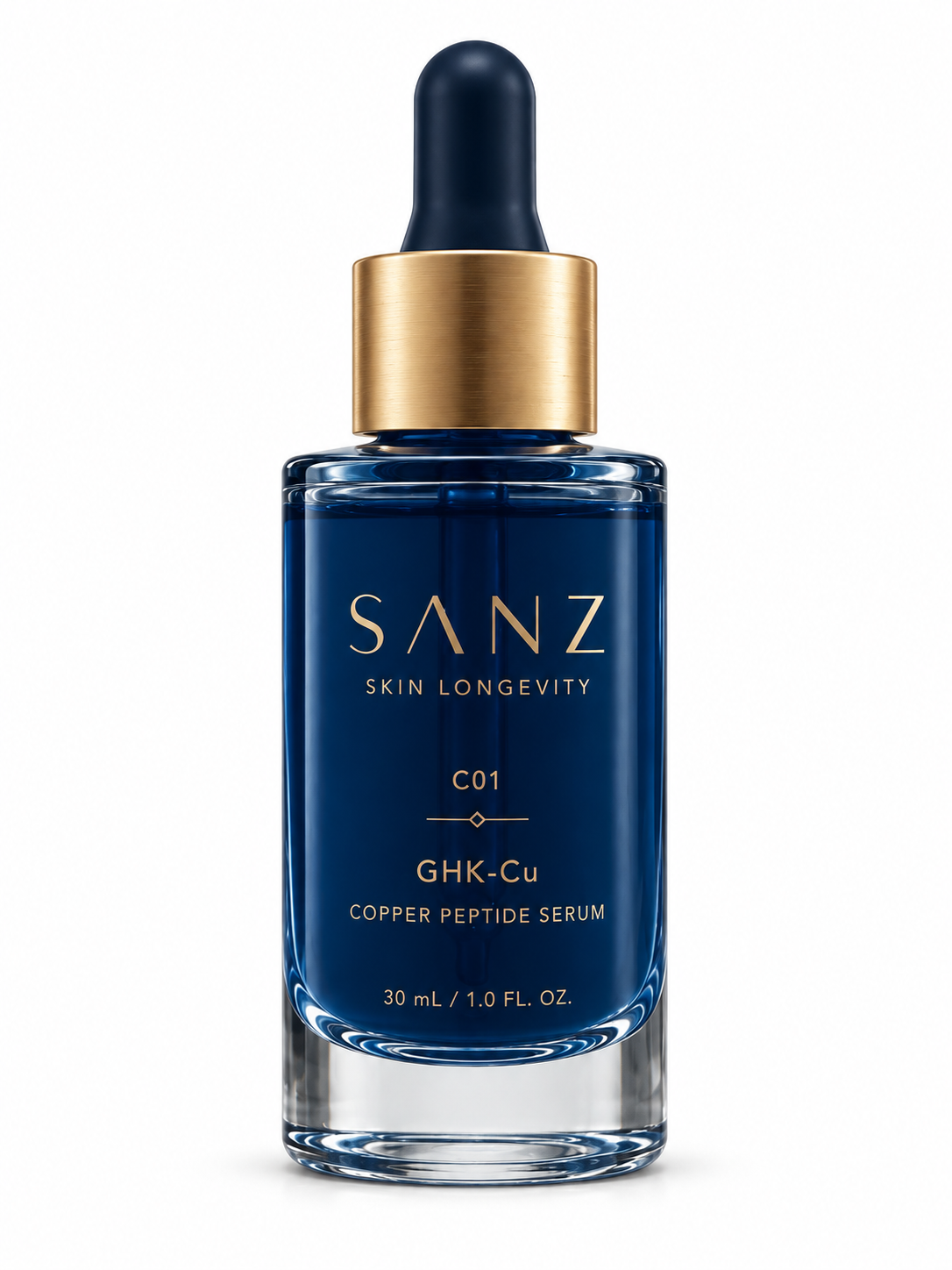
A percentage is useful only when you know what it measures. The amount of a commercial peptide solution added to a serum is not necessarily the amount of active GHK-Cu in the finished product. A meaningful statement identifies the material, the calculation basis and the documentation supporting the final batch.
The blend and the active are different quantities
A supplier may provide an ingredient dissolved in a carrier or combined with other ingredients. Adding a stated amount of that blend does not mean the same amount of pure active was added. The active content of the supplied material must be known before its contribution to the final formula can be calculated.
Even then, a formulation calculation is not the same as measuring the finished batch. Ask whether a percentage refers to raw-material addition, active content by mass or another defined basis. If the basis is omitted, comparing two labels may compare different quantities rather than different strengths.
What a COA can—and cannot—confirm
A certificate of analysis records tests and specifications for an identified material or batch. Check whether it belongs to the incoming ingredient or the finished serum, whether the batch identifier matches and what analyte and method are reported. A generic supplier sheet is not a batch-specific assay of the bottle sold.
Identity, purity and measured active amount answer different questions. A document showing that a raw material meets an identity specification does not automatically verify its final concentration after formulation. Nor does a COA by itself establish a clinical benefit, skin delivery or tolerability.
“A clear percentage begins with a clear definition of what was measured.”
Stability belongs in the conversation
An initial measurement describes a point in time. To support a product through its stated use period, stability information must relate to the finished formula, its package and relevant storage conditions. A stable-looking blue color is not an assay of intact active content.
Peptide chemistry, the vehicle and supporting ingredients can matter; a published laboratory study does not set universal stability conditions for all serums. Ask what was actually tested rather than assuming that a higher headline percentage compensates for undocumented formulation behavior.
INCI and the current C01 boundary
The ingredient list identifies named ingredients, not a complete analytical report or a clinical ranking. It should be read alongside clear dosage language and documentation, not used to infer an exact active percentage from position or color.
C01 is now in production. Its formula brings together copper peptides, complementary peptides, hydration and skin-comfort ingredients. Featured ingredients. The complete INCI list will be added here from the final product label. This article explains relevant label criteria; it does not claim that C01 has completed the assays or stability tests described.
In closing
Use a percentage as the start of a documentation question, not the end of a purchase decision. Defined quantities, batch-relevant evidence and transparent limits are more informative than an impressive number without a measurement basis.